Practical guide · In depth
The “vu ne varietur” mention on a sworn translation
The expression “ne varietur” has its roots in legal Latin and literally means “let nothing be changed”. In the context of sworn translations, this age-old formula is of paramount importance.

Origin and meaning of the expression “ne varietur”
The full mention “vu ne varietur” amounts to attesting that the document produced conforms to the original and must not be altered.
Sworn translators use this formula when initialling every page of the documents they translate. This practice, inherited from the Latin legal tradition, is a safeguard against any fraudulent substitution or alteration of pages after certification.
The legal role of the “ne varietur” mention in a sworn translation
Stronger legal protection
The “vu ne varietur” mention, together with the signature and seal of the sworn translator, fulfils three major legal functions. First, it certifies that the translation fully conforms to the source document. Second, it guarantees the physical integrity of the document by preventing any later alteration. Finally, it fully engages the civil and criminal liability of the expert translator.
This requirement extends to figures: a bank statement in dollars stays in dollars in its translation, down to the last cent.
As the Dictionnaire juridique explains, this phrase of Latin origin contains “a kind of promise not to change anything in the deed” (our translation) and usually appears above the signature of the person making the commitment.
Evidential weight before the courts
This mention gives the translation its evidential weight before French courts and authorities. Without it, a translated document cannot claim the same legal value. Judges recognise this certification as a guarantee of authenticity equivalent, for translations, to that of an authentic instrument (acte authentique).
How the “ne varietur” mention is applied
Placement and technique
Each sworn translator develops their own way of applying it, while still respecting professional standards. The formula may appear on every page, usually in the right-hand margin or at the foot of the page, together with the translator’s handwritten initials. For bound documents, the translator often places their seal across the binding, making it impossible to substitute a page.
Security features
Beyond the “vu ne varietur” mention itself, several features strengthen the security of the document:
- A unique registration number, which provides traceability
- The official seal, engraved with the translator’s exact details
- The original handwritten signature
- The translator’s initials on every page
- A statement of the source and target languages
The standard certification formula
A compliant sworn translation includes the “ne varietur” mention in a broader formula attesting that the translation is faithful to the original document.
Detecting forgeries: a practical guide
Key signs of authenticity
A close look at a genuine sworn translation reveals several specific features. The seal shows a clean impression with perfectly legible characters. The handwritten signature shows the variations in pressure and ink typical of handwriting. Each page bears a separate set of initials, proof that the translator physically handled the document.
Major warning signs
Several clues can reveal a forgery, such as a seal reproduced by photocopy with degraded quality, pages that are not numbered continuously or differences in font from one page to another.
International variations of the formula
French specifics
In France, several variants of the formula are acceptable. Besides “vu ne varietur”, the mentions “lu et approuvé ne varietur” (read and approved, ne varietur) and “certifié conforme ne varietur” (certified true, ne varietur) have the same legal value. What matters is the translator’s formal commitment to the accuracy and integrity of the document.
European and international practice
European countries have developed their own wording. In Belgium, the mention “Voor eensluidend vertaald, ne varietur” accompanies official translations. Switzerland prefers “Traduction certifiée conforme, ne varietur”. Canada tends to use “Traduction certifiée”, with no Latin reference. These variations do not affect the mutual recognition of documents under international conventions.
Digital change and outlook
The move to electronic certification
Sworn translation is gradually going digital. According to the European Commission presents electronic signatures and seals under the EU eIDAS Regulation: they guarantee the origin and integrity of a digital document. This development preserves the spirit of “ne varietur” while adapting to today’s demand for paperless procedures.
New verification tools
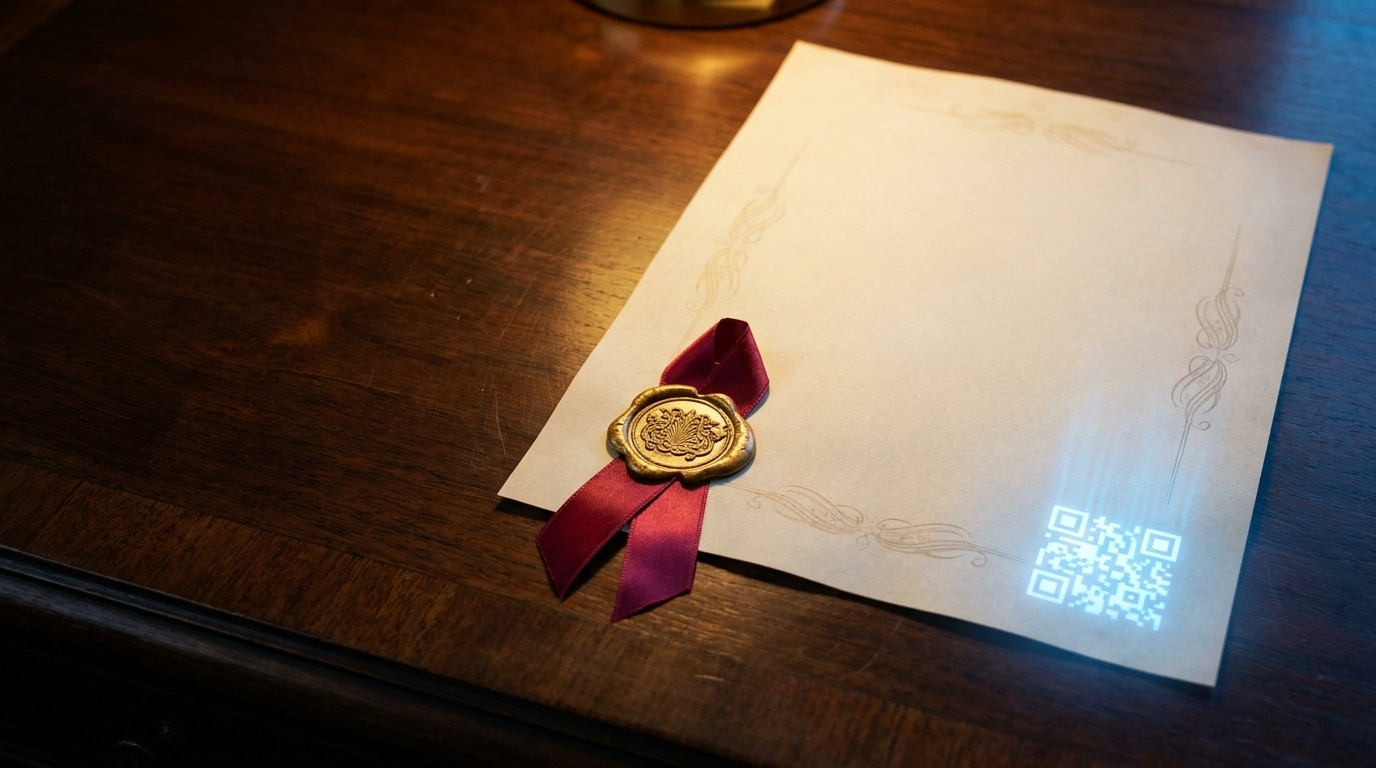
Some translators are beginning to adopt advanced verification technologies. These innovations strengthen security without abandoning the traditional legal foundations.
What it means in practice
The “vu ne varietur” mention has a direct bearing on whether your official documents are accepted. Préfectures, consulates and courts systematically check that it is present before processing an application. If it is missing, your application may be rejected, causing considerable extra delays and costs.
Discreet as it is, this Latin formula is therefore the keystone of any international administrative procedure involving foreign documents. Understanding it and checking it carefully will spare you potentially costly legal complications in your personal or professional projects.
A document to translate?
Send it to us: free quote in about 2 hours.